François Pierre de La Varenne
Known as le Sieur de La Varenne, François Pierre de La Varenne was born in Chalon-sur-Saône, in the Burgundian region of France, either in 1615 (Fine, 2020, p. 2) or in 1618 (Galli, 2016, p. 115). He spent most of his life in Dijon, where he resided for over sixty years until his death in 1678 (Fine, 2020, p. 2). Around the age of 25, La Varenne began his culinary career working for the Marquis d’Uxelles (known as Louis Chalon du Blé). It was during this period, while learning and refining his skills as a cook, that he published his book in 1651 in Paris, even dedicating it to the Marquis, referring to himself as the “Escuyer de vostre cuisine” or the “clerk of your kitchen” (Fine, 2020, p. 2).
Throughout his decade-long service, La Varenne meticulously polished his culinary skills, mastering the art of preparing dishes with exceptional finesse and elegance. Given that his book Le Cuisinier François was published during the reign of Louis XIV, a period marked by the legendary gourmandise and elaborate eating habits of the monarch (Fine, 2020, p. 3), it was incumbent upon La Varenne to try and cater to the sophisticated and luxurious tastes of the aristocracy.
While many authors such as Stengel (2018) claim that La Varenne was an innovator in 17th century French cuisine, formalizing a standardized repertoire of recipe names and preparations (p. 2), others argue that “La Varenne cannot be credited with inventing the new cuisine presented in his book” (Fine, 2020, p. 2), suggesting instead some recipes were likely adapted from colleagues. This notion aligns with Clark’s (1975) observation that the creation of cuisine involves both individual and collective efforts: beyond cooking—the re-creation of the cook—cuisine, and French cuisine to a high degree, involves, besides the individual diner, the collectivity (p.33).
Whether La Varenne’s contributions were the product of his own creativity or a synthesis of shared culinary traditions, his ingenuity is evident not only in the recipes themselves, but also in the thoughtful structure of his cookbook. Unlike many of his contemporaries, La Varenne organized Le Cuisinier François with remarkable clarity and accessibility. As Galli (2016) notes, “Le Cuisinier François stood out for its clear and user-friendly organization, including well-defined chapter headings, consistent spacing between recipes, and an alphabetical table of contents that made the book especially easy to navigate” (p. 115).
La Varenne’s work, whether shaped by personal innovation or the broader culinary network in which he operated, played a foundational role in the development of modern French gastronomy. His influence endures to this day, whether in a classic potage or an elegant entrée, and continues to resonate with chefs and culinary traditions worldwide.
Discover La Varenne’s Published Works

Author: François Pierre de La Varenne
Year: 1651
First book to codify French cuisine.
Source: gallica.bnf / Bibliothèque nationale de France
View on Gallica
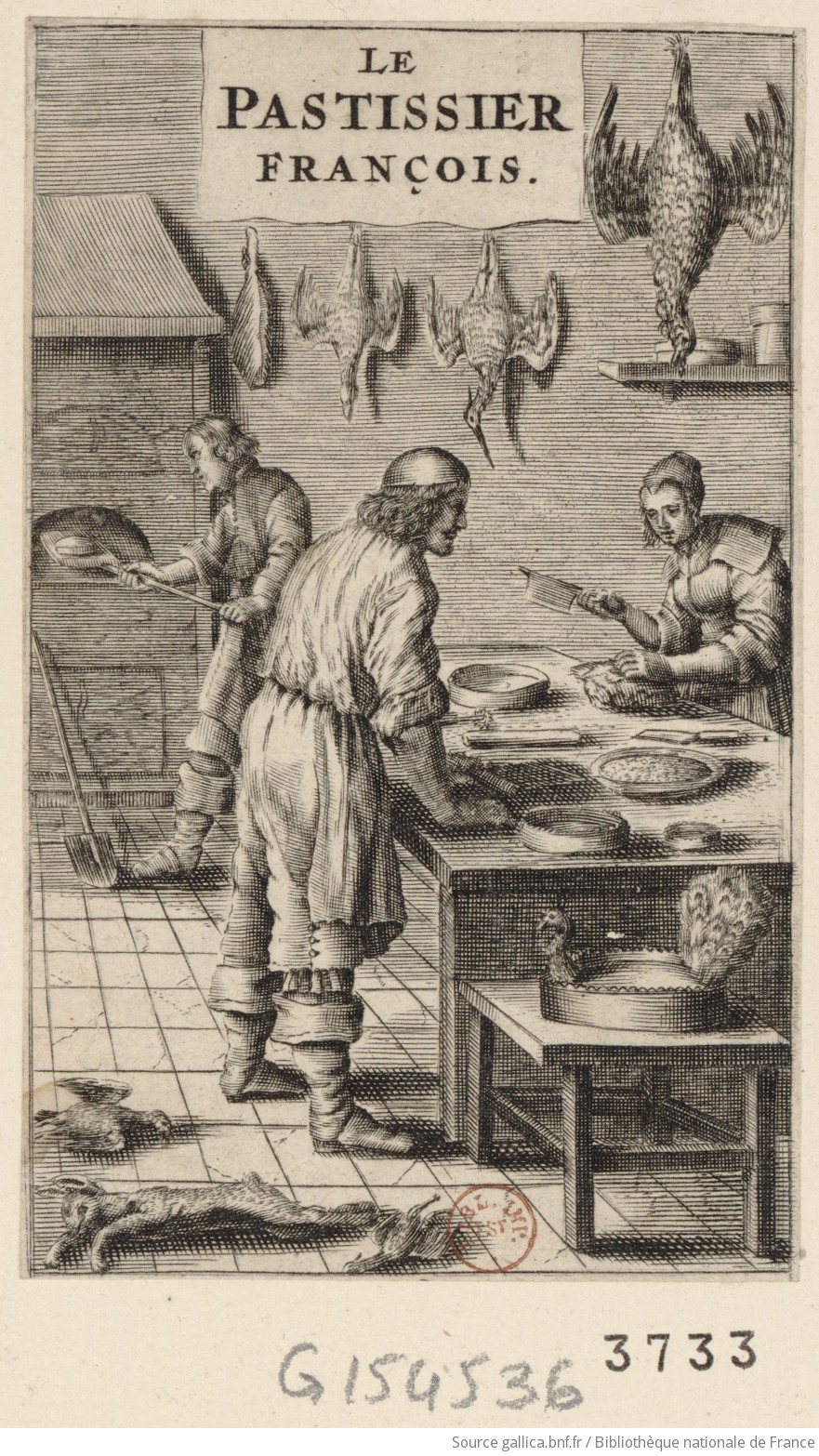
Author: François Pierre de La Varenne
Year: 1653
First French book devoted entirely to pastry.
Frontispice: Le Pâtissier François
Source: gallica.bnf / Bibliothèque nationale de France
View on Gallica
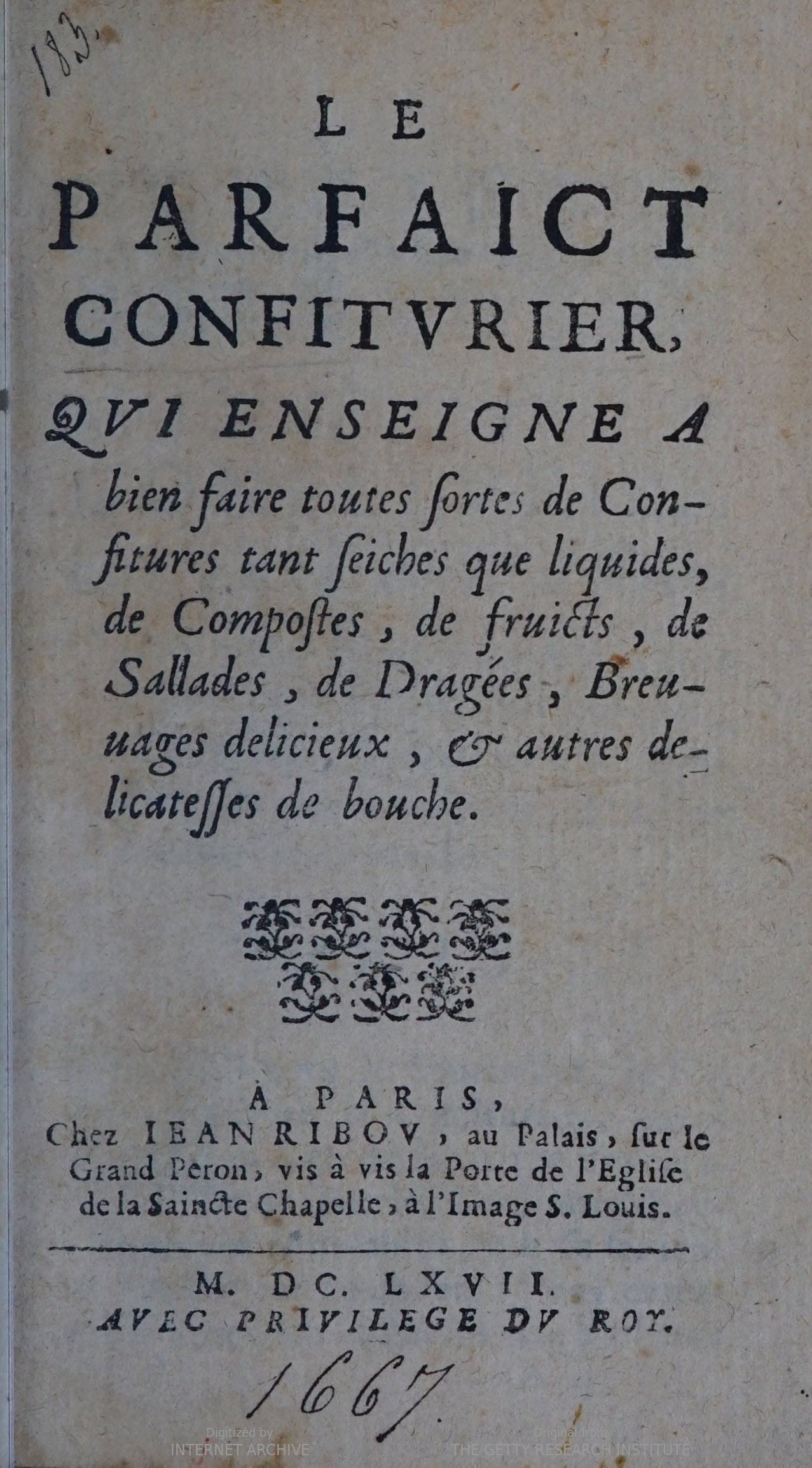
Author: François Pierre de La Varenne
Year: 1667
Focuses on jams, preserves, and syrups.
Source: HathiTrust
View on HathiTrust
Explore the following timeline that highlights significant culinary milestones, and key moments in La Varenne’s life.