Le Cuisinier François
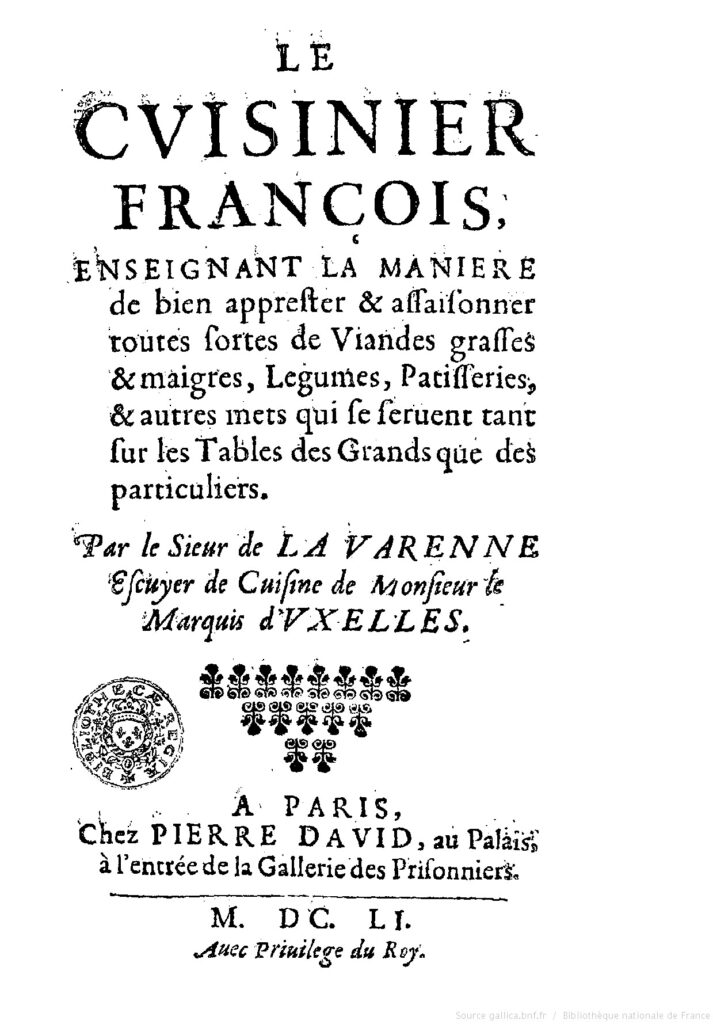
“I ask nothing from you, dear reader, except that my labour may be useful and pleasing to you.”— François Pierre de La Varenne, Le Cuisinier François (1651)
Le Cuisinier François (1651) by François Pierre de La Varenne, represents a landmark in the codification and dissemination of French culinary traditions. Unlike earlier, often disorganized medieval cookbooks, La Varenne’s work is distinguished by its clarity, structure, and accessibility. Galli (2016) emphasizes the innovative layout of the text, noting that “la structure du Cuisinier françois était claire et linéaire: les en-têtes des chapitres, l’espacement entre les recettes et la table alphabétique des matières que l’on trouve dans la plupart des éditions du Cuisinier françois en rendaient la consultation aisée” (p.115). This organizational clarity reflects a significant shift in the presentation and transmission of culinary knowledge in seventeenth-century France.
The book’s success was not only due to its content but also to the broader historical context of printing advances during the Renaissance, which facilitated the widespread diffusion of culinary texts. The role of Pierre David, the Parisian printer and publisher of Le Cuisinier François, was fundamental. As Clark (1975) observes, culinary production parallels literary creation: “cuisine is best analyzed not simply as a single product, meal or recipe, but as a process which involves several distinct products, specific functions and separate actors” (pp.32–33). In this analogy, the printer-publisher serves as a crucial intermediary, enabling La Varenne’s recipes to reach diverse audiences.
David’s established position in the Parisian printing industry allowed for rapid and repeated publication of the cookbook. Fine (2020) documents the immediate popularity of the work: “The first edition of 1651 was an instant success, with the second being published the following year and the third, the year after. Over the ensuing decade, the book was republished 18 times. By 1700, Le Cuisinier François had gone through 52 editions” (p.4). The proliferation of plagiarized editions, including those falsely attributed to La Varenne, underscores the book’s commercial and cultural impact.
Le Cuisinier François also played a pivotal role in projecting French culinary influence beyond national borders. It was translated into English as early as 1653 and later into Swedish (Fine, 2020, pp.3–4). This cross-cultural transmission exemplifies the prestige of French cuisine as a culinary standard in Europe, a dominance further highlighted by Fine’s observation that “French cookbooks were translated into many European languages, [while] no foreign cookbook was translated into French in the seventeenth or eighteenth centuries” (p.6).
Moreover, the book’s accessibility extended beyond professional kitchens to domestic settings, aided by its relatively affordable price (Fine, 2020, p.4). This broad audience helped embed La Varenne’s culinary practices into the daily life of the period.
Le Cuisinier François embodies a critical moment in the history of French cuisine: the synthesis and refinement of culinary knowledge into a clear, structured, and widely disseminated form. This was achieved not only through La Varenne’s innovative authorship, but also through the commercial strategies and technical capabilities of Renaissance printing and publishing. The book’s enduring legacy owes as much to the technological and cultural milieu of seventeenth-century France as to its author’s skill and vision.
Translations of Le Cuisinier François
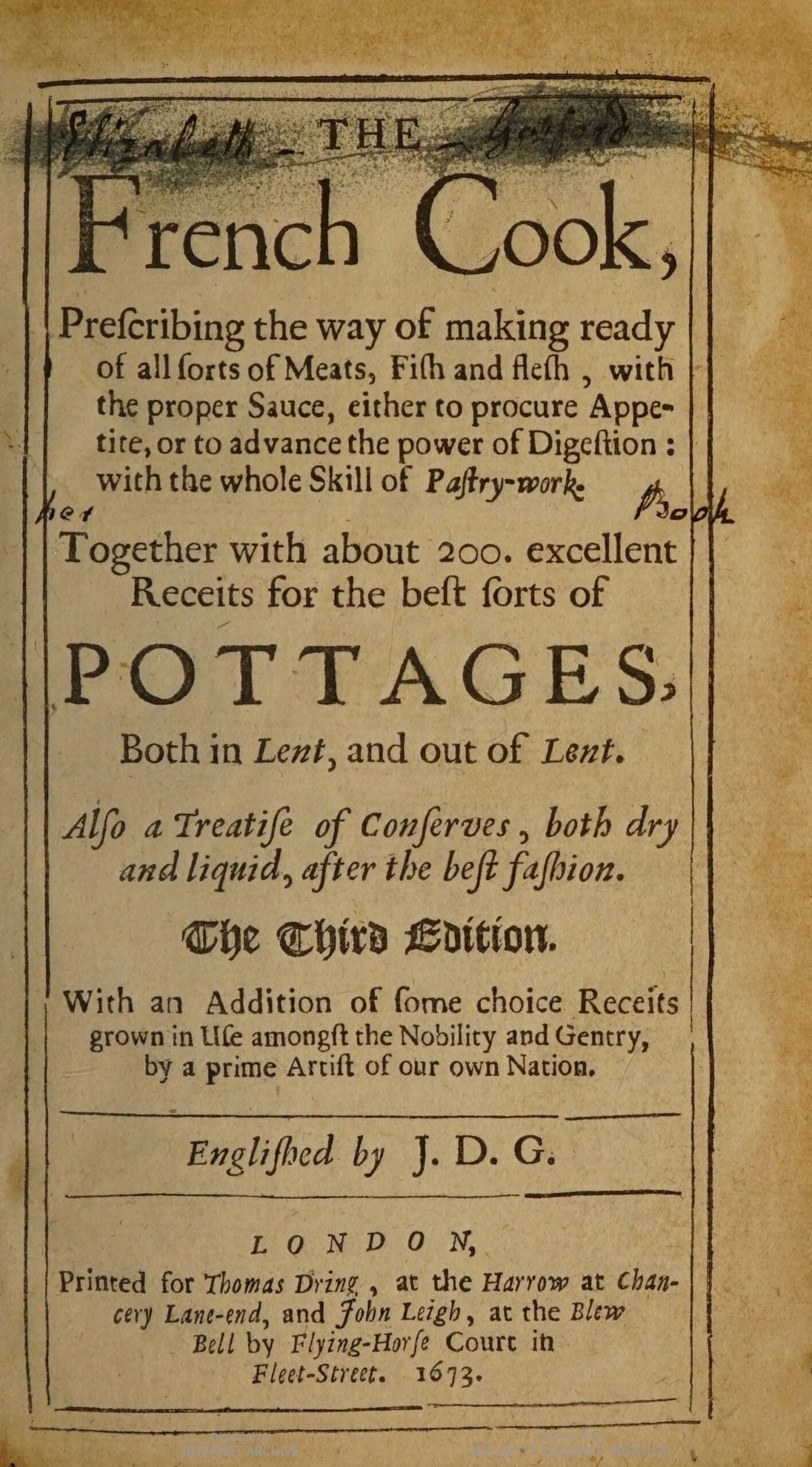
Year: 1673 (English Translation)
Published: London. Printed for Thomas Dring, at the Harrow at Chanceery Lane-end, and John Leigh, at the Blew Bell by Flying-Horse Court in Fleet-Cour
Edition: 3rd
Source: HathiTrust (Harvard Library)
View the Book
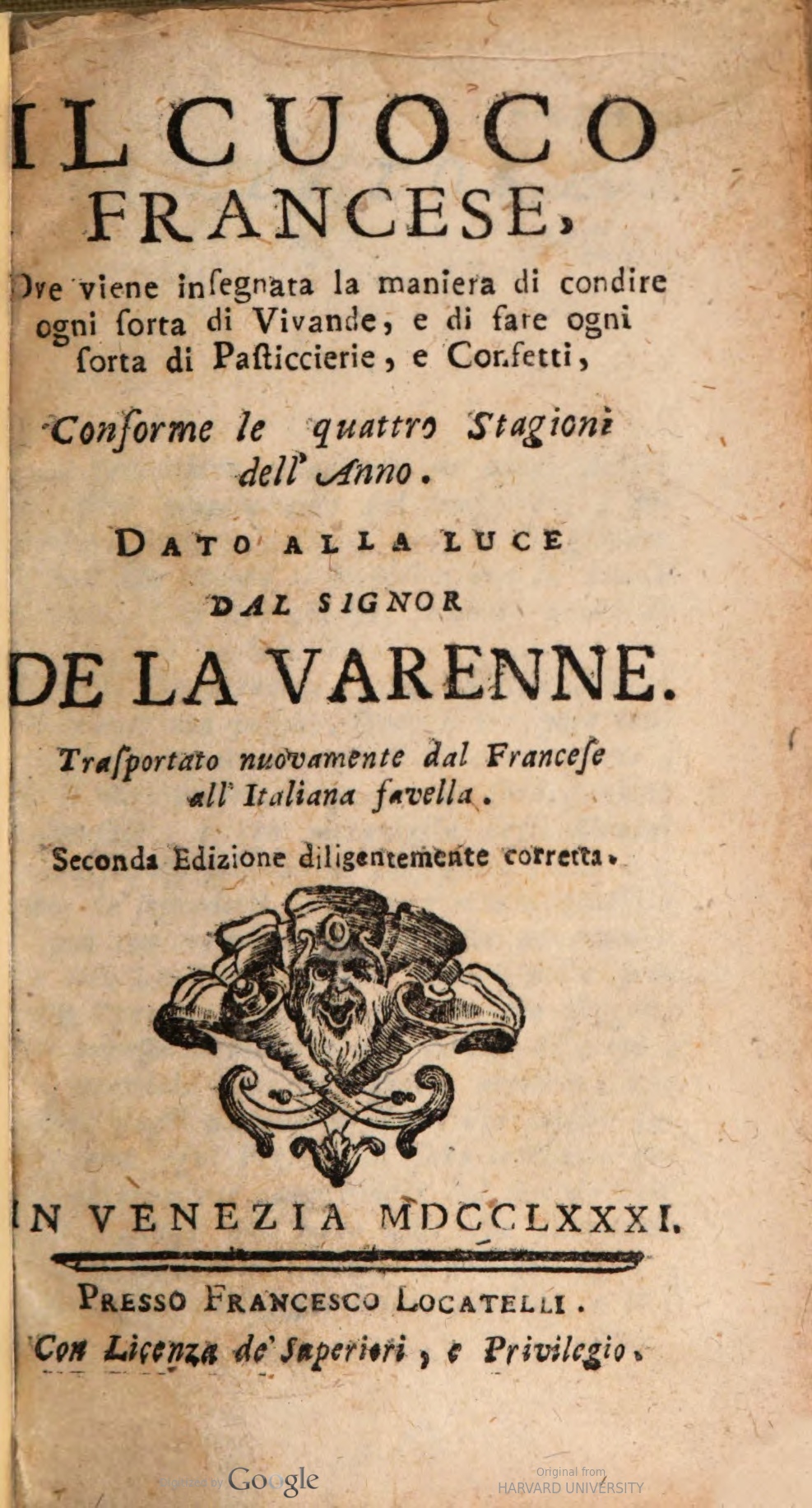
Year: 1781 (Italian translation)
Published: Venezia. Presso Francesco Locatelli
Edition: 2nd
Source: HathiTrust / Getty Research Institute
View the Book